Home
/
Installation
/
DCM-PRO Cable
How to Install Electric Underfloor Heating in a Shower
Can electric underfloor heating be installed in a shower?
Yes. Electric underfloor heating can be installed in a shower as long as the heating system is approved for wet locations and is installed beneath tile according to the manufacturer’s instructions. Warmup electric underfloor heating systems are UL approved for wet areas, including shower floors, making them suitable for residential and commercial shower installations.
Installing a heated shower floor helps keep tile floors warm underfoot, improves comfort, and can help the shower floor dry more quickly after use.
Is electric underfloor heating safe in a shower?
Yes. Electric underfloor heating is safe for shower installations when it is UL approved for wet locations, installed according to the manufacturer’s instructions, protected by GFCI, and connected using the appropriate electrical components required by local building codes.
What flooring can be used over electric underfloor heating in a shower?
Electric underfloor heating in a shower should be installed beneath tile or stone flooring. Ceramic tile, porcelain tile, and natural stone provide excellent heat transfer and are the recommended floor coverings for heated shower floors. These materials provide excellent heat transfer, making them the most efficient floor coverings for electric underfloor heating systems.
What are the requirements for installing electric underfloor heating in a shower?
It is recommended to use separate heating cables or mats for the shower and the rest of the bathroom floor. If you are installing a curbless shower, separate heaters are not required but are still recommended.
Using separate heating systems allows the shower floor and bathroom floor to operate independently. If service is ever required on the shower heating system, the bathroom floor heating can continue operating normally.
Note: Only one thermostat is required if combined systems remain under 15 Amps. Systems with multiple cables exceeding 15 Amps will require a relay.
Example of a shower floor heating system installation.
Below is an example of an installation plan that Warmup can provide for any project. In this example, there are two separate DCM-PRO cable systems:
- A dedicated cable for the shower.
- A dedicated cable for the rest of the bathroom floor.
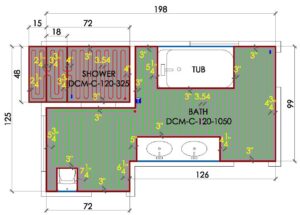
Both cables begin at the recommended thermostat location.
Contact Warmup to have an installation plan created for your project.
What are the steps required to install electric underfloor heating in a shower?
Follow these steps when installing radiant floor heating in a shower to ensure a successful, efficient installation:
- Test the heating system with a digital multimeter before installation.
- Install insulation boards and uncoupling membrane if required.
- Lay the heating cable or mat according to the installation manual.
- Test the system again before covering it with any thinset or self-leveler.
- Install a waterproofing kit (if applicable) along the edges of the wall and along all seams.
- Cover the cable with thinset and install the tile.
- Perform a final resistance test.
- Connect the heating system to a thermostat.
Can electric underfloor heating be installed over a shower pan or waterproof shower membrane?
Yes — electric floor heating can be installed over a sloped mortar shower pan, but it should not be installed directly on top of a rubber waterproof shower membrane. The heating cable must be positioned between non-combustible materials, covered with thin-set mortar, and finished with tile.
Install the Warmup heating system on top of the sloped pan if the shower base is a poured mortar bed. Then, skim-coat with thin-set and tile over. Do not install Warmup directly over the rubber moisture membrane. Embedding the heating cable directly within a thick mortar bed is not recommended because it can significantly increase system warm-up times.
In the case of building panels such as backerboards or WEDI systems, you can install Warmup mats and cables directly over the boards. Please refer to the corresponding installation manual for more information.
> Read more about Warmup’s waterproofing kit for shower floor heating installations, designed to help prevent moisture damage.
How do I install floor heat around a shower drain?
Always keep the heating cable away from the shower drain and mounting hardware. Keep in mind the below tips during installation around a shower drain:
- Never cut or shorten the heating cable. If you are using a StickyMat, simply separate the wire from the mesh and remove the unused mesh from the rest of the mat.
- With the loose wire, install the cable around the drain area using hot glue or tape to secure the cable away from the drain or screw-mounts.
- Never cross the cable over flat or linear drains and make sure to completely cover the heating wire with thinset.
Can floor heat be installed under a tub?
No, it is not recommended to install floor heating under a tub.
While a claw foot tub that has space between the bottom of the tub and the floor can have heat under it, installing heat there is not necessary since it is not a walkable area.
Do not install heating under built-in tubs, cabinets, or fixtures that sit directly on the floor. This can trap heat and damage the cables in the floor.
Where should the thermostat be installed?
Install the thermostat outside the shower in an accessible location where the cold leads from both heating systems can easily reach the electrical box. This minimizes cable routing and simplifies installation and future servicing.
Can the thermostat be installed in the shower?
No, the thermostat cannot be installed in the shower. While Warmup thermostats carry a high IP33 rating protecting them from water spills, they should be installed safely away from direct contact with a water source. Warmup thermostats are approved for wet rooms and bathrooms but should be installed at a safe distance from tubs and showers.
All electrical connections should comply with local electrical codes, including GFCI protection where required.
Contact Us for Assistance
Warmup has designed electric floor heating systems for bathrooms and wet areas for over 30 years and can provide project-specific installation plans for a successful shower installation.
If you are considering underfloor heating in a shower floor, we are here to help! Contact us to help plan your project.