Home
/
Installation
/
DCM-PRO Cable
Self-Leveler vs. Thinset for Electric Underfloor Heating
The right choice between thinset or self-leveler when installing electric underfloor heating depends on the flooring type. Modified thinset is recommended for most ceramic, porcelain, and natural stone tile installations. Self-leveler is recommended when installing mosaic or small-format tile, glue-down hardwood, vinyl (LVT or LVP), or other floorings that require a smooth flat substrate.
Use the table below to quickly determine whether thinset or self-leveler is recommended for your flooring type.
| Flooring | Thinset | Self-Leveler |
| Standard Tile | ✅ Recommended | Optional |
| Large-Format Tile | ✅ Recommended | Optional |
| Small-Format/Mosaic Tile | Optional | ✅ Recommended |
| Stone | ✅ Recommended | Optional |
| Vinyl (LVT or LVP) | ❌ | ✅ Required |
| Glue-Down Hardwood | ❌ | ✅ Required |
*Flooring manufacturer requirements always take precedence over general installation recommendations.
What is the difference between thinset and self-leveler?
Thinset is a cement-based adhesive used to bond tile (and other flooring finishes) directly to the subfloor or underfloor heating system. Self-leveler (or self-leveling underlayment) is a pourable cement product that creates a smooth, level surface. It can be used over underfloor heating to encapsulate the system and create a suitable installation surface for the finished flooring.
In most tile installations, thinset serves as both the bonding adhesive and the setting bed, while self-leveler is primarily used to create a flat installation surface before the finished flooring is installed.
How do you choose the right thinset or self-leveler for use with underfloor heating?
When using either a thinset or self-leveler with an underfloor heating installation, considering the following when choosing a product:
- Rated for use with radiant heating
- Compatible with the chosen finished flooring
- Compatible with the subfloor and uncoupling membrane (including plastic/vinyl substrates)
- Meets ANSI specifications
When should you use thinset?
Thinset should be used when installing a tile or stone directly over the heating system (with the exception of mosaic or small-format tiles, which require self-leveling). Warmup recommends using a plastic trowel when spreading thinset over exposed heating cable because it reduces the likelihood of accidental nicking of the heating wire during installation.
Should you use modified or unmodified thinset over underfloor heating?
Warmup highly recommends the use of a modified thinset (or polymer-modified adhesives) when installing underfloor heating. The addition of the polymer compound creates a denser bonding reaction during the curing process and improves heat distribution.
| Modified Thinset | Unmodified Thinset |
| Contains polymer additives | Cement-based only |
| Greater flexibility | Less flexible |
| Better accommodates heat spread and transfer | Less tolerant of thermal movement |
| Warmup recommended | Use only if the flooring manufacturer specifies |
*Unless the flooring or tile manufacturer specifies otherwise, Warmup recommends using a modified thinset for most electric underfloor heating installations.
Should you use a single-layer or double-layer thinset installation method?
When installing underfloor heating under tile or stone flooring, the following thinset installation methods are recommended:
- Single-Layer Method: Apply a 3/8” layer of thinset over the heating system, then lay the tile or stone directly into the thinset layer.
- Double-Layer Method: Embed the heating system in a skim coat of thinset, completely covering the heating element and sensor wires. Spread the thinset over the cable in the same direction as the wire, ensuring that the space between the cable is filled. Allow the thinset layer to dry completely, then apply a second layer of thinset and lay the tiles into the thinset. The minimum thinset depth between both layers is 3/8″.
The double-layer method should be used when installing smaller tiles or a combination of different tile sizes or if this is your first time installing underfloor heating.
When should you use self-leveler?
Self-leveler should be used when installing:
- Mosaic or small-format tiles
- Glue-down hardwood
- Vinyl (LVT or LVP)
- Or other floorings requiring a flat substrate
These floorings require a flatter substrate than standard tile does. Self-leveler completely encapsulates the heating cable while creating a smooth, uniform surface that improves flooring adhesion and helps to prevent uneven finished floors.
What self-leveler should I use?
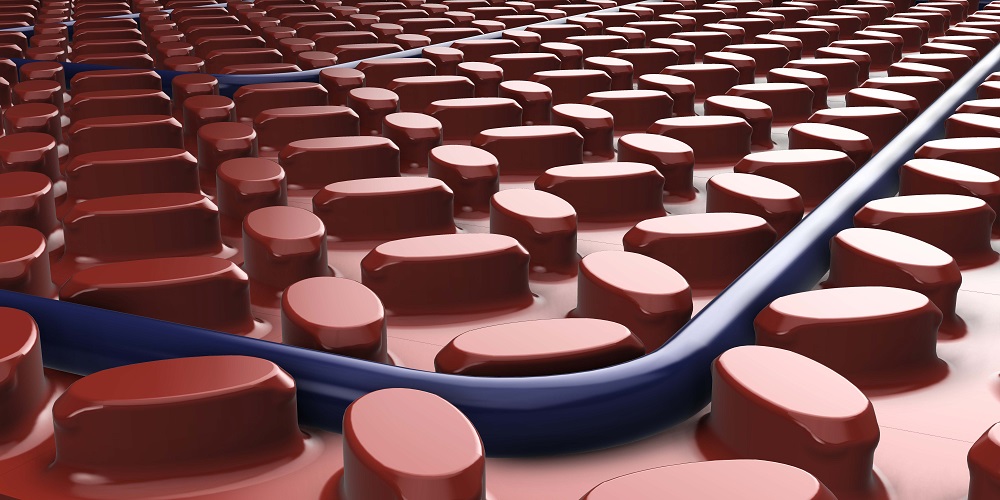
Given the depth of the membrane channels, the chosen self-leveler must be suitable for use within the range of 10-16mm if applied evenly. To be safe, Warmup recommends that the self-leveler be suitable for at least 10-20mm to account for deviations. It is also important to ensure that the chosen self-leveler is suitable for use over plastic/vinyl surfaces.
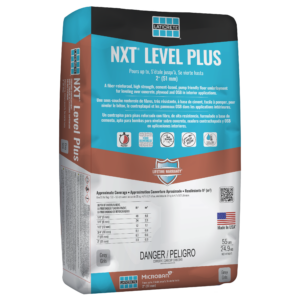
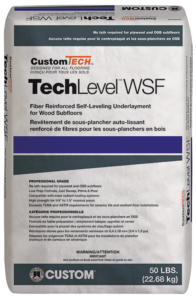
Warmup recommends using a flexible, cement-based self-leveling compound approved for radiant heating installations, such as:
How much self-leveler is required over the underfloor heating system?
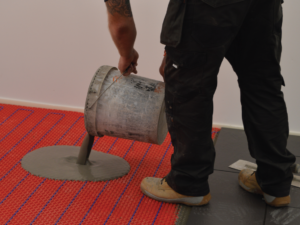
Self-leveler must be installed as one continuous pour, extending at least 10mm (3/8″) above the membrane castellations, for a total depth of approximately 1/2″ – 3/4″. Applying a thinner layer can cause shrinkage and may pull the membrane upwards off the subfloor as it cures.
Will self-leveling bond to the DCM-PRO Membrane?
Yes, the Warmup Membrane will grip to the self-leveling compound. Always confirm that the self-leveler is compatible with plastic/vinyl floor substrates before installing.
Should I use primer?
Primer is required for some installations and optional for others. Even where it is optional, using a primer generally improves adhesion and is recommended by Warmup. Warmup recommends the following primers:
| Installation Method | Primer Needed? |
| Peel & Stick on OSB | ✅ Required |
| Peel & Stick on plywood | Optional |
| Peel & Stick on concrete | Optional |
| Peel & Stick on Ultralight Insulation Board | Optional |
| Fleece-Backed Membrane | ✅ Solvent-free primer recommended |
When can you turn on underfloor heating after installation?
Always wait until the thinset or self-leveler has fully cured before energizing the heating system. The cure time for thinset is typically 1-3 weeks. Always refer to the installation instructions for the thinset or self-leveler you are using, as cure times may differ between products and manufacturers. Failure to wait until the mortar has fully cured will result in damage to the heating system and can cause the thinset or self-leveler to become brittle.
Does the DCM-PRO Membrane affect curing time?
No, the membrane does not change cure time. Curing time is not impacted by the membrane because cementitious adhesives cure through hydration rather than air drying. The curing time of the adhesive will be stated within its instructions. Warmup does not recommend the use of adhesive that use solvents and harden by drying out (i.e. ready mixed adhesives) as the membrane is waterproof.
Common mistakes to avoid
Avoid these common mistakes when installing underfloor heating using either a thinset or self-leveling compound:
- Turning on the heating system before the mortar fully cures
- Using a ready-mixed adhesive instead of cementitious thinset
- Pouring self-leveler too thin
- Using a metal trowel over exposed heating cable
- Forgetting primer when required
- Choosing products that aren’t approved for radiant heating
Best practices
Always do the following when installing underfloor heating using either a thinset or self-leveling compound:
- Confirm flooring manufacturer compatibility
- Use a modified thinset whenever possible
- Verify thinset/self-leveler compatibility with vinyl/plastic surfaces
- Allow the mortar to cure fully before energizing the heating system
- Follow all product-specific installation instructions
- Test the heating cable resistance before covering it with thinset or self-leveler