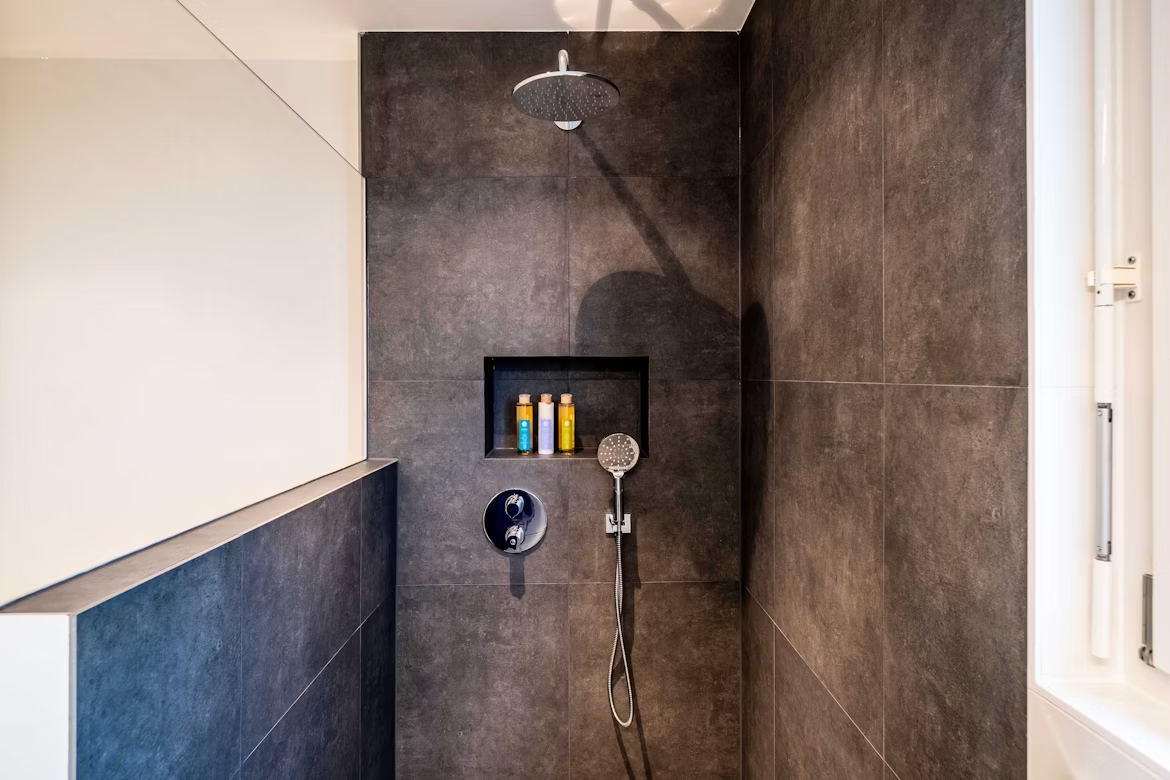
The best walk-in shower floor finish is durable, comfortable underfoot, and water and slip resistant, making ceramic, porcelain, and natural stone materials the best to use.
There are many different flooring options that can be used to fit individual preferences, making it difficult to narrow down the right choice. We’ll break down the top seven flooring options, including porcelain, ceramic, pebble, granite, marble, glass, and concrete. We’ll go over:
- The benefits of having a walk-in shower
- The pros and cons of each floor type
- Which flooring finishes work best with heated floors
- Additional fixtures that improve walk-in showers
- How radiant heat can enhance a walk-in shower
Why are walk-in showers a good choice for bathroom renovations?
Walk-in showers are a great bathroom upgrade because they are more accessible, spacious, and contemporary than a step-in shower.
Walk-in showers are designed so that there is no lip or threshold to step over, making entering and exiting them seamless. Unlike traditional shower enclosures, they include a more open design with fewer barriers, making them easier to access, less complicated to clean, and better to move around in due to their broader spacing. Additionally, their wider entryways have the option of including a frameless, semi-frameless, or framed shower door.
They are a great choice in particular for homeowners who are looking to remain in their home long-term, as walk-in showers make daily routines safer and more comfortable, supporting aging needs over time.
Their minimalist, clean-cut appearance pairs well with modern bathroom designs while simultaneously improving accessibility for people of all ages and mobility levels.
Additional benefits include:
- Easier maintenance
- Greater design flexibility
- Increased bathroom space
What are the best flooring options for a walk-in shower?
The best walk-in shower flooring finishes – porcelain, ceramic, pebble, granite, marble, glass, and concrete – include materials designed specifically for balance safety, durability, water resistance, and maintenance requirements.
| Flooring Material | Water Resistance | Slip Resistance | Maintenance Level | Typical Material Cost* |
| Porcelain Tile | Excellent | Excellent (textured finishes) | Low | $3-$15/sq. ft. |
| Ceramic | Good | Good | Low | $1-$10/sq. ft. |
| Pebble Tile | Good (depends on grout and sealing) | Excellent (textured finishes) | Moderate | $8-$30/sq. ft. |
| Granite Tile | Excellent | Good | Moderate | $10-$35/sq. ft. |
| Marble Tile | Good | Moderate | High | $10-$50+/sq. ft. |
| Glass Tile | Excellent | Moderate | Low | $10-$30/sq. ft. |
| Concrete | Excellent (when sealed) | Good | Moderate | $4-$15/sq. ft. |
*Approximate 2026 material cost only – installation and labor costs can vary depending on project size and regional labor rates.
1) Porcelain Tile
Porcelain provides the best combination of durability, water resistance, safety, and design flexibility.
Porcelain has a very low water absorption rate, making it one of the best choices for high-moisture environments. For a walk-in shower, a textured porcelain mosaic or tiles with higher slip-resistance ratings would be best for accessibility. The ANSI A326.3 standard recommends a minimum wet-area DCOF (dynamic coefficient of friction) rating of 0.42, so look for tiles that meet or exceed that rating.
It is available in numerous styles and colors that can be customized to fit design preferences.
- Pros: Highly water resistant, resistant to mold and staining, many design options, easy to clean.
- Cons: Professional installation is recommended, larger formats may require additional slip-resistant finishes.
2) Ceramic Tile
Ceramic tile is budget-friendly, versatile in finish appearance, and performs well in high-moisture environments.
Though it is typically more porous than porcelain, ceramic is usually a more affordable alternative that has similar features, so long as you choose tiles that are specifically rated for wet-floor applications.
Textured ceramic tiles can also provide improved traction, making them a practical choice for shower floors that require slip-resistance.
- Pros: Budget-friendly, large design selection, easy to install and maintain.
- Cons: Less durable and water resistant than porcelain, may be susceptible to chipping and wear due to significant use.
3) Pebble Tile
Pebble tiles provide significant slip-resistance, last very well over time, and create a luxurious spa-like appearance.
The textured surface created by natural pebbles adds traction underfoot, making pebble flooring an accessible option for showers. Since they are often installed in mosaic sheets, they can conform easily to the slope and design of a shower.
The thermal mass of pebbles allows them to absorb and retain heat effectively, creating a warm, comfortable surface.
- Pros: Naturally slip-resistant, available in a variety of natural colors and stone shapes, unique visual appeal.
- Cons: Uneven surface, requires more frequent cleaning due to more grout lines and surface area.
4) Granite Tile
Granite provides a durable, stylish natural stone finish that is easy to clean and maintain.
As one of the hardest natural stones, granite is resistant to scratches, chips, and signs of wear. It has a long lifespan due to how well it upholds over time and heavy daily use.
- Pros: Highly durable, resistant to wear, natural veined stone appearance, long lifespan.
- Cons: Requires periodic sealing, is typically more expensive than more cost-effective finishes such as ceramic or porcelain.
5) Marble Tile
Marble offers a natural, timeless aesthetic, though requires greater maintenance than other shower flooring finishes.
Natural marble features a unique veining appearance that elevates contemporary bathroom designs. However, marble is a porous material, meaning that it requires regular sealing. Generally, in a high-moisture environment such as a shower, it should be checked every 6-12 months and be resealed every 12-24 months.
Marble can also scratch or stain easily, requiring more thorough cleaning and prevention measures than other flooring options.
- Pros: Luxurious appearance, unique and natural patterns, complements modern bathroom aesthetics.
- Cons: Requires periodic sealing, more susceptible to scratches, etching, and stains.
6) Glass Tile
Glass tiles create a bright, inviting look, though should be chosen carefully as a flooring finish.
Glass is naturally non-porous and highly resistant to moisture, making it a suitable option for wet environments. Its reflective properties can make bathrooms feel more open and brighter by enhancing the lighting. Glass tiles are also resistant to staining and fading, making them highly durable and requiring minimal maintenance.
However, in showers, the smooth surface can become slippery when wet, making mosaic glass tiles a better choice for improved traction.
- Pros: Water resistant, easy to clean, lasts long, reflects light well.
- Cons: Can be very slippery if not installed as a mosaic, not all glass tiles are rated for floor use.
7) Concrete
Concrete is a budget-friendly flooring option that can be used to create a seamless, durable, and highly customizable shower floor.
When properly sealed, concrete offers excellent water resistance that can withstand decades of use. It’s also highly versatile in its appearance, as homeowners can choose from various colors and textures.
Concrete has a cooler surface, creating a cool sensation underfoot, which may be ideal in warmer climates but not colder ones.
- Pros: Very durable, cost-effective, easy to clean, minimal grout lines, industrial aesthetic, customizable finishes.
- Cons: Requires waterproofing and sealing, feels cool to touch, sealing must be maintained over time.
What features can enhance a walk-in shower?
Additional fixtures and design details can improve the comfort, convenience, and functionality of a walk-in shower.
Many fixture additions can enhance accessibility, making the shower and bathroom space more comfortable for those of any age or mobility level. Some of the most popular and useful items are:
- Built-in shower benches: provide a convenient place to sit or store toiletry items.
- Recessed niches: keep products organized without taking up additional shower space.
- Rainfall shower heads: create a spa-like experience.
- Handheld shower heads: offer additional showering flexibility.
- Frameless glass shower enclosures: help create a more open and spacious shower.
- Linear drains: streamline the shower floor design and are often used to support curbless or low-threshold walk-in showers.
- Radiant heating systems: warm the floor for optimal underfoot comfort and heat moisture in the room, allowing it to evaporate quicker and reduce the risk of mold buildup. Floor heating systems work best with tile and natural stone finishes due to their high thermal conductivity and heat retention properties.
| Feature | Benefit | Accessibility |
| Shower Bench | Provides a place to sit while showering. | Makes showering easier for older adults and those with limited mobility. |
| Recessed Niche | Keeps toiletries organized and within reach. | Minimizes bending, stretching, and reaching. |
| Rainfall Shower | Delivers a gentle, full-body spray. | Wide, gentle spray is easy to stand or sit under. |
| Handheld Shower Head | Offers greater flexibility when showering. | Ideal for seated users and individuals with varying mobility levels. |
| Linear Drain | Improves water drainage and supports modern layouts. | Often used in curbless shower designs for easier entry. |
| Frameless Enclosure | Creates an open, airy feel. | Creates more space within the shower. |
| Heated Floors | Provides warmth and helps with moisture control. | Helps floors dry quicker, reducing slip risks. |
Which flooring finish is best to use with radiant heating in a walk-in shower?
Porcelain, ceramic, natural stone, and pebble flooring are some of the best materials to use in a walk-in shower with radiant heating.
Dense flooring finishes such as porcelain, ceramic, granite, marble, and pebble tiles have strong thermal properties that allow them to easily conduct and retain heat while evenly spreading it across the surface. Due to their strong conductivity, they tend to hold heat long after the system has turned off.
Porcelain is generally considered one of the best all-around tile options for heated showers due to its low absorption rate, durability, and design flexibility. Ceramic has a slightly higher absorption rate, though offers a more budget-friendly and easier to install option to porcelain tile. Natural stones such as granite and marble offer a similar heating performance, though tend to be more expensive to purchase. Pebble tiles absorb and radiate heat effectively as well, while providing an added layer of traction underfoot.
What makes radiant heating great to use in walk-in showers?
Radiant bathroom floor heating beneath walk-in shower tile enhances comfort and provides consistent warmth that improves moisture control, enhances air quality, and reduces slip risks.
Warmup floor heating systems such as the DCM-PRO and StickyMat are specially designed for wet rooms and bathroom installations and can be customized to fit any design layout. The StickyMat is great for bathroom renovations due to its ultra-thin heating wire, which comes pre-spaced and embedded within a mesh mat, simplifying the installation process while minimizing the impact on floor height. The DCM-PRO combines a heating cable with an uncoupling membrane that helps protect flooring from subfloor movement, reducing the risk of cracking tile and grout lines.
Since the floor surface is kept at a slightly higher temperature than the ambient air, water evaporates quicker after showering, helping effectively reduce dampness and standing moisture on the floor. This can help improve the longevity of shower and bathroom flooring and grout materials while also enhancing bathroom safety by reducing the risk of slipping.
Additionally, radiant heat warms the floor from the ground up, directly warming surrounding surfaces. As there is no air circulation involved, it delivers even and consistent warmth without circulating dust, allergens, or humidity around the room, resulting in cleaner airflow.
If you’re planning a heated walk-in shower project, contact our team or request a free quote to find out which heating solution and flooring selection would be best. For additional guidance, explore our YouTube channel for installation videos, product demonstrations, and expert advice.
Frequently Asked Questions
What is the best flooring for a walk-in shower?
Porcelain tile is often considered the best all-around flooring for a walk-in shower. It combines excellent water resistance, durability, slip resistance, design versatility, and compatibility with radiant floor heating.
What is the most slip-resistant flooring for a walk-in shower?
Pebble flooring and textured porcelain mosaics are typically among the most slip-resistant shower flooring options. Their textured surfaces and increased grout lines provide additional traction in wet conditions.
Does radiant floor heating work in a walk-in shower?
Yes, radiant heating systems such as the StickyMat and DCM-PRO are designed for use inside walk-in showers and wet rooms. When installed according to local electrical codes and manufacturer guidelines, heated floors can safely provide warmth and comfort directly beneath the shower floor.
Which walk-in shower flooring works best with radiant heating?
Porcelain tile, ceramic tile, natural stone, pebble flooring, and concrete are among the best flooring materials for heated shower floors. These materials conduct and retain heat efficiently, helping maximize both comfort and system performance.
How Do Walk-In Showers Improve Bathroom Accessibility?
Walk-in showers improve bathroom accessibility by eliminating barriers to entry, creating a safer and more comfortable bathing experience for people of all ages and mobility levels. With no curb to step over, a walk-in shower reduces tripping hazards and can easily accommodate a shower bench, grab bars, a handheld shower head, or a wheelchair, making it a popular choice for aging in place.